Key Takeaways
- Genesis Allocation: Roughly 72 million ETH was allocated across 8,893 genesis addresses when Ethereum launched in July 2015.
- Current Status: Status at last dataset refresh: 3.12% of the original genesis ETH remained in the same genesis addresses, while most had moved elsewhere.
- Holding Behavior: A notable 860,233 ETH remains untouched, possibly from long-term believers or inactive accounts.
- Cluster Analysis: A transaction-link heuristic identified 8,578 estimated entities and 213 clusters with two or more genesis addresses. This suggests some address-level concentration, but it should not be read as definitive ownership attribution.
TThe Ethereum genesis block marked the start of one of the most influential blockchain networks in crypto. At launch, roughly 72 million ETH was allocated to early participants and contributors, setting the foundation for the network Ethereum has become today. But what happened to the original Ethereum genesis ETH, and how much still sits in the same addresses?
Let’s take a deep dive into the on-chain data of the Ethereum genesis addresses to understand how the initial ETH distribution has played out over time.
The Ethereum Genesis Distribution
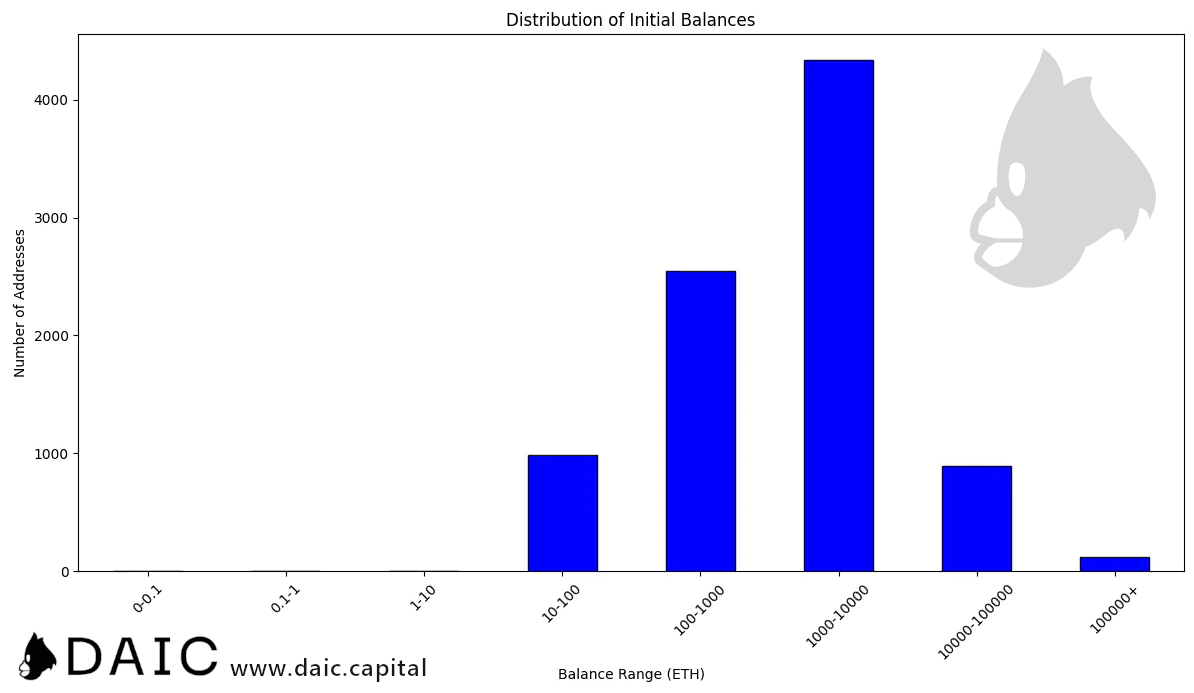
The Ethereum genesis allocation assigned 72,009,990.49948 ETH to 8,893 genesis addresses. These balances reflected the early sale, contributor allocations, and other launch-related allocations that formed Ethereum’s initial state.
- 0–0.1 ETH: 2 wallets
- 0.1–1 ETH: 0 wallets
- 1–10 ETH: 0 wallets
- 10–100 ETH: 989 wallets
- 100–1000 ETH: 2,546 wallets
- 1000–10,000 ETH: 4,339 wallets
- 10,000–100,000 ETH: 895 wallets
- 100,000+ ETH: 121 wallets
The allocation was heavily skewed toward larger addresses, including 121 genesis addresses with more than 100,000 ETH each.
Current State of Ethereum Genesis Wallets
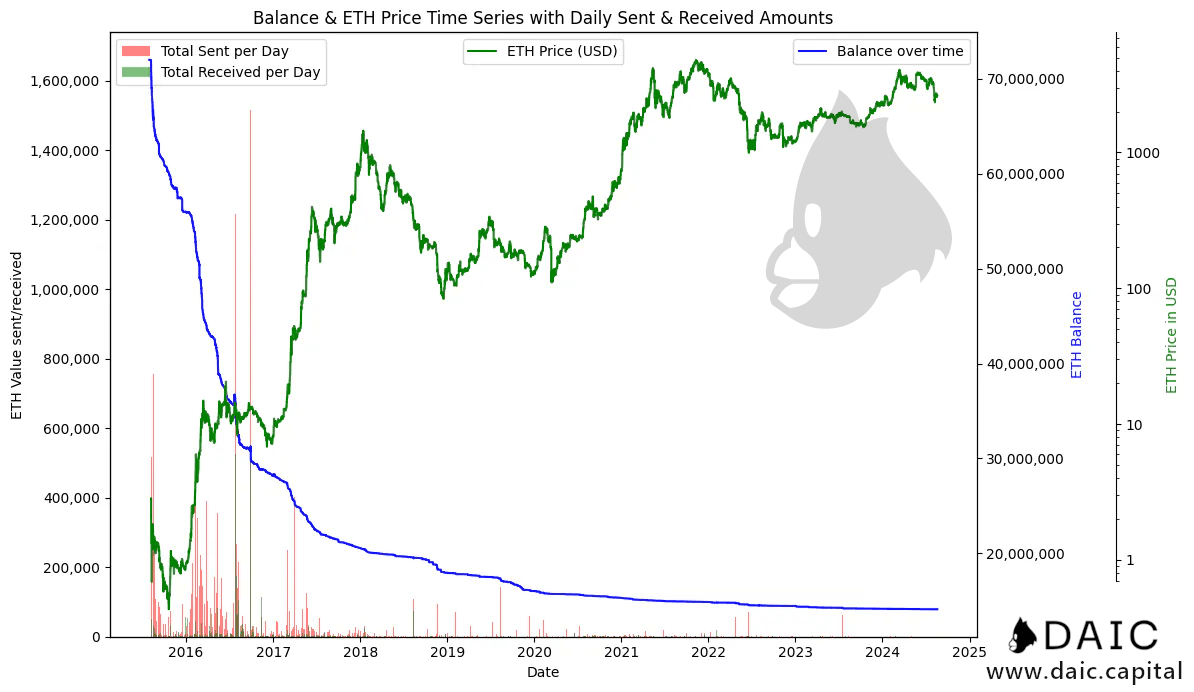
ver time, the behavior of Ethereum genesis addresses has varied widely. Many addresses moved part or all of their ETH, while others remained dormant or even received additional ETH later. While many holders sold some or all of their ETH, others continued to hold or even accumulate additional ETH over the years. As of today, a significant portion of the genesis ETH has left its original wallets, while a fraction remains untouched.
Here’s how the allocation looked by address balance at genesis:
- Total ETH at genesis: 72,009,990.49948 ETH
- ETH remaining in genesis addresses at dataset refresh: 2,251,844.437 ETH
- ETH no longer held in the original genesis addresses: 69,758,146.07 ETH
- Share of original genesis ETH still held in the same addresses: 3.12%
- Untouched genesis ETH at dataset refresh: 860,233 ETH
Holding and Spending Behavior
At the time of analysis, only 3.12% of the original genesis ETH remained in the same addresses. The vast majority had moved elsewhere over the years, although address movement alone does not reveal whether the ETH was sold, transferred to new custody, deposited into services, or consolidated by the same owner.
Still, 860,233 ETH had not moved at the time of analysis. These untouched balances may belong to long-term holders, lost-key addresses, inactive accounts, or entities that simply never moved their original allocation.
Ethereum itself has also changed significantly since genesis. The network moved from proof-of-work to proof-of-stake during The Merge in September 2022, but Ethereum’s account history and genesis balances remained part of the same chain history.
Cluster Analysis: Understanding Unique Users
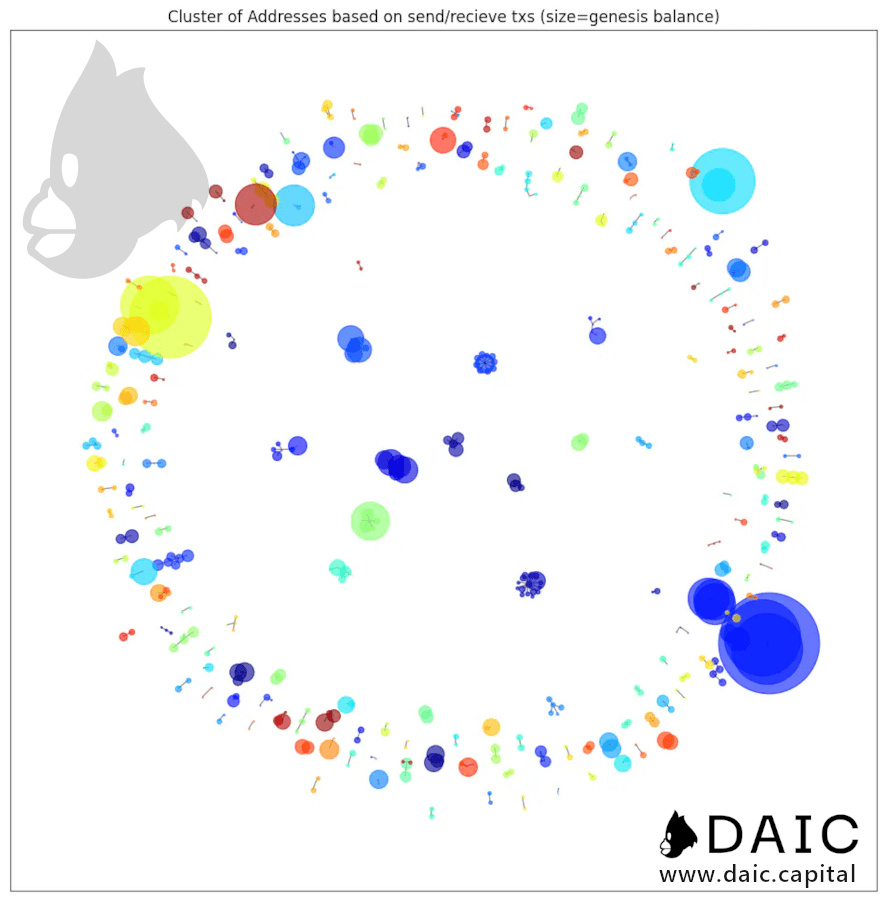
TTo better estimate participant concentration, we conducted a cluster analysis. The heuristic grouped genesis addresses when they later transacted with one another, which can indicate common control but does not prove it. By tracing interactions, we aimed to estimate how many unique users actually participated in the Ethereum genesis.
Using this method, the 8,893 genesis addresses mapped to an estimated 8,578 entities. We identified 213 clusters containing two or more genesis addresses.
What Happened to the Genesis ETH?
The Ethereum genesis allocation created the initial ETH distribution that launched the network in July 2015. At the time of our latest dataset refresh, only a small fraction of that ETH remained in the original genesis addresses: 3.12% was still held in the same addresses, while most had moved elsewhere.
Our cluster analysis suggests that the address-level distribution may somewhat overstate the number of independent participants, with 8,578 estimated entities identified from 8,893 genesis addresses. Because clustering is heuristic, these figures should be read as an estimate rather than definitive ownership attribution.
As Ethereum continues to evolve, the remaining genesis addresses are still useful historical markers. Whether the untouched ETH belongs to long-term holders, dormant accounts, or lost-key addresses, these balances remain a visible link to Ethereum’s launch and the early participants who helped bootstrap the network.
The information provided by DAIC, including but not limited to research, analysis, data, or other content, is offered solely for informational purposes and does not constitute investment advice, financial advice, trading advice, or any other type of advice. DAIC does not recommend the purchase, sale, or holding of any cryptocurrency or other investment.